To Africa for a Rose
by Emma Ellis
To Africa for a Rose is a forthcoming work of historical non-fiction spanning three generations of women in a tale of survival and transformation during the British Empire’s closing century. Their stories illuminate a way of life that, although now consigned to history, still resonates in our world today.
Honor, Patricia and Jeannine are respectively the wife, daughter and granddaughter of Australian Gallipoli veteran Frank Anderson. In 1925, he pitches the women into pioneering farm life in East Africa, prompted by his chance discovery of a China rosebush flourishing in the wilds of British-administered Tanganyika Territory (Tanzania), just as the British Empire reaches its zenith – and begins to unravel.
Honor shows resourceful courage as she ventured into the unknown, ultimately finding the key to the family’s survival… Patricia holds the complex venture together in the wilds of Africa… Jeannine picks up the pieces as the dust settles.
To Africa for a Rose is pending publication:
enquiries can be sent via the Contact page.

Honor: Honoria Ethel Anderson, née Hassell, 1893 - 1980

Patricia: Ethel Patricia Wright, née Anderson, 1918 - 2011

Jeannine: Monica Jeannine Cook, née Wright, 1944 -

Frank Anderson,
1890-1960
Outline
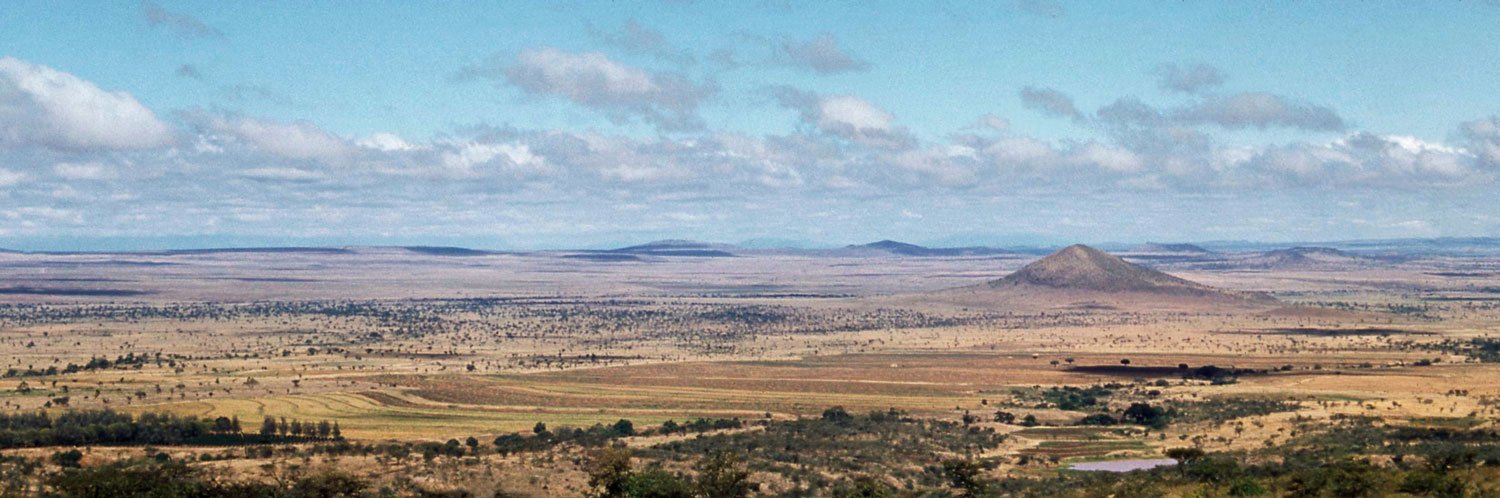
Seeking a fresh start in 1925 after narrowly surviving World War One’s Gallipoli campaign and a shattering earthquake, Frank Anderson travels to East Africa where he discovers a China rosebush flowering improbably in a dry, remote wilderness. On this slender evidence of agricultural potential, he asks his wife, Honor, and their seven-year-old daughter, Patricia, to leave Western Australia and join him in establishing a farm named Rasharasha in wild bush. The family’s new home is located in the isolated Maasai highlands of Tanganyika Territory (Tanzania) between Mount Kilimanjaro and the Serengeti. It is miles from medical help, the only ‘neighbours’ the nomadic, warring Maasai people and the plentiful wild animals gracing the plains.
Drawing on a rare and previously unseen archive of family documents spanning more than a century and five continents (Europe, Australia, Asia, Africa and North America), this book charts how, behind the women’s daily acts of courage, lies a complex reality that ultimately determines their futures. From Australia to Africa, the family experiences a labyrinth of contradictions as human rights movements within the British Empire are entangled with rivalrous, often covert, Great Power politics. Although, at times, this taxes the women to breaking point, their stories are also of hope: of actions and events that reinforce civil rights, create opportunities for women and people of colour and stimulate efforts to conserve and protect the natural environment.
Dramatic events unfolding in To Africa for a Rose take place roughly from the 1870s to the 1970s.
Blending family story with wider historical events, the book first evokes early colonial life in Albany, (Western Australia) and moves to Gallipoli (Turkey) and Yokohama (Japan).
Then it moves to such East African locations as the safari town of Arusha, as well as the Serengeti Plains, Ngorongoro Crater and Mount Kilimanjaro. The main focus is Rasharasha, an isolated sloping valley near Arusha, Tanganyika (now Tanzania). The name, Rasharasha, means ‘light rain’ in Swahili, and in the Andersons’ time, ‘land of mists’. The story ultimately moves to Europe and the USA.

Much of the book is set in the context associated with East Africa’s personalities such as resident Denys Finch-Hatton (immortalised in Out of Africa) and visitor Ernest Hemingway (Green Hills of Africa, Snows of Kilimanjaro).
Frank Anderson and his family are revealed as people who faced survival through courage, new perspectives and transformation. Threaded through the story are those vital, yet often unacknowledged, roles often especially played by women who support others’ hopes and dreams.
This account of a way of life now long past reveals surprising facts about a period of history that not only still resonates but also defines the lives we live today.
Shown in the photograph is a rose similar to the one on which Frank Anderson risked his family’s future in 1925. Of ancient Chinese origins and known as ‘Old Blush’, it was fragrant and elegant, yet tenacious.
For the Anderson family, this rose symbolised how to grow, adapt and survive, even in radically changed circumstances.

Patricia, Jeannine and Honor at Rasharasha, late 1950s